A program can produce thousands of form fills and still starve sales of real opportunities.
The B2B lead generation strategies that actually build pipeline share one trait: they focus on buyer fit, purchase intent and sales readiness instead of raw contact volume. The difference between a busy program and a productive one is whether marketing and sales agree on what a good lead looks like, and whether every channel is built to find more of them.
This guide covers 16 strategies that consistently produce qualified pipeline, plus the benchmarks, scoring rules and measurement model that make them work together.
Quick answer: The most effective B2B lead generation strategies are a precise ideal customer profile, clean data, account-based marketing, high-intent content, intent data, disciplined email and outbound, content syndication with a strict lead specification, separate fit and intent scoring, nurture and retargeting, events, and partner referrals. The right mix depends on your deal size, sales cycle and buying-committee complexity.
What Is B2B Lead Generation?
B2B lead generation is the structured process of identifying, attracting, qualifying and engaging business buyers who may become revenue opportunities. It covers targeting, engagement, qualification, routing and follow-up, not just capturing contact information.
In practice, lead generation works as a system rather than a single campaign. Each stage feeds the next, and most performance problems show up in the handoffs between stages.
The Six Stages of a B2B Lead Generation System
- Target identification. Define the accounts and roles worth pursuing using firmographic, technographic and behavioral attributes.
- Attraction. Reach those buyers through search, content, social, email, events and partners.
- Engagement and capture. Turn attention into an identifiable person or account through forms, registrations, trials or tracked behavior.
- Qualification and scoring. Judge each lead on fit, intent and timing.
- Nurturing. Keep engaged buyers moving until they are ready for a sales conversation.
- Sales handoff. Route qualified leads to the right rep, with context, inside an agreed response time.
Types of B2B Leads
Not every lead is ready for the same treatment. Each type needs its own handling rules.
| Lead type | What it means | Typical next step |
|---|---|---|
| Marketing qualified lead (MQL) | Meets agreed fit and engagement thresholds | Nurture or SDR qualification |
| Sales accepted lead (SAL) | Reviewed by sales and accepted for follow-up | First sales contact |
| Sales qualified lead (SQL) | Vetted by sales as worth direct pursuit | Discovery call or demo |
| Product qualified lead (PQL) | Has shown value through trial or product usage | Sales-assisted conversion |
| Intent-based lead | Inferred from research behavior across the web | Prioritized, timely outreach |
| Account-level lead | A target company, regardless of which contacts have engaged | Buying-committee mapping and ABM |
Lead Generation vs. Demand Generation
Demand generation builds awareness and preference before buyers are ready to talk. Lead generation turns that attention into identifiable opportunities. Treating them as the same thing usually leads to gating too early and passing weak leads to sales. Strong programs fund both and connect the data between them.
What Makes a B2B Lead Qualified?
A qualified B2B lead matches your ideal customer profile, has a real business problem your offer solves, and involves a stakeholder connected to the buying decision with a logical next step. A download alone does not make a lead sales-ready, and an early-stage buyer is not automatically unqualified.
| Qualification question | Why it matters |
|---|---|
| Does the account fit the ideal customer profile? | Confirms revenue potential |
| Is there a relevant business problem? | Establishes need |
| Is the contact connected to the decision? | Reduces wasted outreach |
| Is there a logical next step? | Creates sales momentum |
| Is there a timing signal? | Separates active evaluation from casual research |
The best lead generation systems do not send every contact to sales. They route the right contacts, suppress the wrong ones, and nurture buyers who need more time. Every strategy below is judged against that standard.
B2B Lead Generation Benchmarks
Most B2B funnels lose the majority of their volume between MQL and SQL, so that stage is where better strategy pays off most. Use the benchmarks below as reference points, not targets: definitions of “lead” and “MQL” vary widely between companies, and your own historical data by channel is always the better comparison.
Funnel Conversion Rates by Stage
| Funnel stage | Median conversion rate |
|---|---|
| Visitor → MQL | 1.8% |
| MQL → SQL | 13.7% (top quartile: 28.4%) |
| SQL → Opportunity | 38.4% |
| Opportunity → Closed-won | 23.8% |
Two findings from the same research matter for strategy. Companies that apply a formal numeric fit score to every MQL before promoting it convert at 21.4% MQL-to-SQL, well above the median. Response time is the most predictive operational factor for that same stage.[1]
What Moves MQL-to-SQL Conversion
| Factor | Reported effect |
|---|---|
| Formal ICP fit scoring | 21.4% vs. 13.7% median[1] |
| Behavioral scoring (intent, pricing-page visits, usage) | 39–40% vs. about 13% with demographic-only scoring[2] |
| Lead source: SEO vs. PPC | 51% vs. 26%[2] |
| Contacting a lead within one hour | Nearly 7x as likely to qualify vs. waiting another hour; 60x+ vs. waiting 24 hours[3] |
The response-time finding comes from a Harvard Business Review analysis of about 1.25 million leads across 42 US companies. It is older research, but it remains the most widely cited evidence on response time, and newer benchmarks point the same way.[3]
B2B Cost Per Lead
Cost per lead varies more by industry, deal size and channel than by any other factor, so a single average is close to useless. Industry analyses for 2026 put most B2B sectors between roughly $200 and $700 per lead, with legal and financial services at the high end.[4]
| What drives CPL up | What drives CPL down |
|---|---|
| Higher contract values and longer sales cycles | Owned channels (SEO, email, organic social) once assets exist |
| Enterprise targeting: companies over $500M in revenue average about $429 per lead vs. $166 under $1M[5] | Strong nurturing that converts existing contacts |
| Paid social and trade shows | Referrals and partner introductions |
| Strict qualification criteria and premium targeting filters | A clear ICP that removes spend on poor-fit accounts |
A lower CPL is not automatically better. A $400 lead that becomes an opportunity at three times the rate of a $150 lead is the cheaper lead. Judge CPL against close rate, sales cycle length and customer lifetime value, and track cost per qualified opportunity as the headline number.
How B2B Buyers Actually Buy
- Buying groups are large. Gartner research puts the typical B2B buying group at 6–10 decision-makers, each gathering four or five pieces of information independently.[6]
- Buyers spend little time with vendors. Gartner finds buyers spend only about 17% of total purchase time meeting with potential suppliers, across all vendors combined.[6]
- Cycles are long. Complex B2B purchases can run around 10 months, according to 6sense’s 2025 Buyer Experience Report. Smaller deals move much faster.[7]
The practical takeaway: most of the decision happens before a buyer talks to sales, and several people need to be convinced. Lead generation has to reach the whole buying committee and support their research, not just capture one contact.
16 B2B Lead Generation Strategies That Build Qualified Pipeline
- Build a precise ideal customer profile
- Build a clean data foundation
- Run account-based marketing as an operating model
- Match conversion offers to the buyer’s stage
- Publish high-intent content and own search
- Prioritize with intent data and respond fast
- Treat email as a precision channel
- Run outbound that is useful or invisible
- Use LinkedIn and paid media with role-specific messaging
- Run content syndication with a real lead specification
- Score fit and intent separately, then route and align with sales
- Nurture and retarget across long buying cycles
- Offer guided trials and confidence assets
- Run webinars and events that solve buying-committee problems
- Build authority with executive content and video
- Build referral and partner programs
Key Points Before You Start
- Strategies 1 and 2 are foundations. Every other strategy performs worse without a precise ICP and clean data.
- Strategies 3 through 16 are motions you choose from based on deal size, sales cycle and buying-committee complexity. See how to choose.
- Each strategy ends with the metric to judge it by. If a tactic produces activity but not qualified pipeline, cut it.
1. Build a Precise Ideal Customer Profile
A precise ideal customer profile (ICP) defines which companies are worth pursuing before any campaign, content or outreach begins. It describes the firmographic, operational, financial and behavioral traits of the accounts most likely to become profitable customers. “Manufacturing companies” or “mid-market businesses” describe a market, not a profile.
| ICP element | Weak definition | Strong definition |
|---|---|---|
| Industry | Healthcare | Multi-location healthcare operators with centralized procurement |
| Company size | Mid-market | 250–2,000 employees with regional expansion plans |
| Pain point | Needs efficiency | Manual lead routing delaying sales follow-up |
| Buying trigger | Interested in growth | Recently funded, hiring sales reps or expanding territories |
| Decision role | Executives | VP Sales, CRO, RevOps or demand generation leadership |
How to run it:
- Start from closed-won deals, not assumptions. Look for shared industry, size, tech stack, trigger and deal size.
- Add disqualifiers: long procurement barriers, no budget owner, low urgency or an incompatible operating model.
- Write the ICP down and share it with sales, so both teams judge leads by the same rules.
- Review it twice a year against new win and loss data.
Judge it by: share of pipeline from ICP-fit accounts, and win rate on ICP vs. non-ICP deals.
2. Build a Clean Data Foundation
Every targeting, scoring and personalization decision depends on the quality of your data. Bad records mean misrouted leads, bounced email and wasted sales time. Strong programs combine five types of B2B data.
| Data type | What it covers | What it is used for |
|---|---|---|
| Firmographic | Industry, size, revenue, location, funding, growth | Matching accounts to the ICP |
| Demographic | Job title, seniority, department, responsibilities | Finding decision-makers and influencers |
| Technographic | Tools and platforms a company uses | Integration angles, competitive displacement |
| Behavioral | Site visits, content views, email clicks, webinar attendance | Measuring engagement and stage |
| Intent | Topic research, review-site visits, competitor comparisons | Spotting accounts actively in-market |
Layered together, these turn a broad target into a precise one. “IT managers” becomes “IT managers at fast-growing biotech companies currently researching cloud security.” That level of precision lifts engagement and cuts wasted spend.
How to run it:
- Run a data hygiene pass: remove duplicates, verify emails, standardize job titles and company names. Duplicate identification keeps routing and suppression files trustworthy.
- Fill gaps in existing records with contact append and email append rather than buying new lists you cannot verify.
- Refresh records continuously, or at minimum every three to six months. B2B contact data decays quickly through job changes and company moves.
- Connect CRM, marketing automation and enrichment tools so every team sees the same record. A central data warehouse helps when several systems hold pieces of it.
- Collect only what you can lawfully use, and document consent under GDPR, CCPA and CASL where they apply.
Judge it by: email bounce rate, duplicate rate, and the share of records with complete fit fields.
Need a clean starting point? Reach Marketing’s database services and list building teams audit, clean and enrich B2B data before campaigns launch. Schedule a data review.
3. Run Account-Based Marketing as an Operating Model
Account-based marketing (ABM) concentrates effort on high-value accounts instead of spreading campaigns across a broad audience. It works when marketing, sales and customer success agree on the target accounts, map each buying committee, build account-specific messaging and measure progress at the account level. A personalized ad is not ABM if sales is not aligned on the same accounts and timing.
Tiering keeps ABM realistic, because not every account deserves custom work.
| ABM tier | Best for | Typical execution |
|---|---|---|
| Tier 1 (1:1) | Strategic enterprise accounts | Deep research, custom content, executive outreach |
| Tier 2 (1:few) | High-fit named accounts | Industry-specific content, segmented campaigns, sales sequences |
| Tier 3 (1:many) | Broader qualified market | Scaled personalization, intent-based nurture, automation |
How to run it:
- Pick tiers using fit plus intent, not fit alone.
- Map content to buying jobs: problem identification, solution research, requirements and supplier selection.
- Run coordinated 90-day sprints across marketing, SDRs, sales and customer success, with weekly reviews.
Judge it by: engaged stakeholders per account, meetings and pipeline per targeted account, and stage conversion by tier.
4. Match Conversion Offers to the Buyer’s Stage
Forcing every visitor toward a demo creates friction that kills pipeline. A buyer comparing vendors may be ready to talk; a buyer still defining requirements needs a checklist or calculator first.
| Buyer condition | Best-fit offer | What it signals |
|---|---|---|
| Exploring a problem | Diagnostic checklist | Early-stage need |
| Comparing approaches | Buyer’s guide | Category-level intent |
| Building a business case | ROI calculator | Budget discussion under way |
| Evaluating vendors | Demo or consultation | Direct sales opportunity |
| Managing internal approval | Business case template | Stakeholder consensus forming |
How to run it:
- Match form length to commitment. Low-commitment offers ask for little; high-commitment offers can justify more qualifying fields. Twelve fields before a basic checklist will tank conversion.
- Build landing pages around one offer. Use a specific headline, a clear value proposition, proof such as logos, testimonials and case results, fast load times and a mobile-friendly layout.
- A/B test one variable at a time, such as the headline, CTA or form length, and wait for a statistically meaningful result before rolling out a change.
- Offer alternatives to “Request a demo”: a readiness assessment, a five-slide debrief or a sandbox walkthrough.
Judge it by: conversion rate by offer, and the share of each offer’s leads that reach opportunity.
5. Publish High-Intent Content and Own Search
High-intent content serves buyers who are already evaluating a problem, a solution category or a vendor. These buyers are comparing options, building requirements or preparing an internal business case. Because B2B buyers research independently, search is often where the relationship starts, and SEO-sourced leads tend to convert well downstream.[2]
Formats that attract evaluators, not browsers:
- Cost and pricing explainers
- Comparison pages and “X vs. Y” guides
- Buyer’s guides and requirements checklists
- Industry-specific solution and use-case pages
- Implementation guides and ROI resources
- Templates, calculators and frameworks buyers can reuse
How to run it:
- Build topic clusters around problem, evaluation and industry queries, with strong internal linking between them. Reach Marketing’s SEO and PPC team builds these clusters for B2B sites.
- Write for answer engines as well as search engines: lead each section with a direct answer, use clear question-style headings, and add FAQ schema.
- Gate selectively. Leave discovery content ungated so it spreads and ranks. Gate tools and deep assets where the value exchange is obvious.
- Make assets easy to share inside the buying committee, since champions forward them to finance, IT and procurement.
Judge it by: organic leads that reach opportunity, branded search growth, and inbound meetings traced to content.
6. Prioritize With Intent Data and Respond Fast
Intent data shows which accounts appear to be researching relevant topics, categories, competitors or problems. First-party intent comes from your own channels: site visits, content engagement, email clicks and repeat visits. Third-party intent reflects research activity across publisher networks and review sites.
Intent is only valuable when paired with fit. A poor-fit account showing intent is still a weak opportunity. A high-fit account showing repeated intent deserves fast, personalized follow-up.
Signal patterns worth acting on:
- Multiple visits from the same target account
- Visits to pricing, comparison or demo pages
- Several stakeholders from one account engaging
- A sudden spike in research on your category
- Engagement after a funding round, new hire, expansion or compliance change
Respond while the interest is live. Firms that contacted a lead within an hour were nearly seven times as likely to qualify it as those that waited even an hour longer.[3] Build routing rules and alerts so high-intent, high-fit leads reach a named rep in minutes, not the next morning.
Judge it by: speed to first contact, meeting rate on intent-flagged accounts, and pipeline from accounts flagged as in-market.
7. Treat Email as a Precision Channel
Email still works for B2B lead generation, but inbox providers now enforce strict sender rules. One spike in spam complaints can damage your domain reputation for months. Run email like a regulated channel.
| Area | Standard |
|---|---|
| Authentication | SPF, DKIM and DMARC configured; BIMI where possible |
| Unsubscribe | One-click unsubscribe, honored quickly |
| List hygiene | Verify addresses; sunset or re-engage dormant contacts |
| Targeting | Send only when fit, behavior or intent justifies it |
| Copy | 100–120 words, one point per message, a specific reason for writing |
| Sequences | About three touches over 7–10 business days, then pause unless new engagement appears |
Rotate the value in each touch, for example an artifact, then a question, then an offer, instead of repeating “just following up.” For hands-on help, see Reach Marketing’s email deliverability and email marketing services, and the email glossary for terms.
Judge it by: inbox placement, spam complaint rate, and reply-to-meeting conversion. Treat opens and clicks as diagnostics only.
8. Run Outbound That Is Useful or Invisible
Outbound prospecting still produces pipeline when every message has a credible reason to exist now. If a message does not help the recipient, it is noise, and noise damages both reply rates and sender reputation.
| Strong outbound triggers | List quality requirements |
|---|---|
| New funding or investment | Accurate contacts and verified job functions |
| Hiring for relevant roles | Territory and account-fit rules applied |
| Expansion into new markets | Competitors and current customers suppressed |
| Leadership changes | Students, consultants and job seekers excluded |
| Technology adoption or replacement | Only roles with real influence on the decision |
| Regulatory pressure or a public growth initiative | Recently refreshed data |
How to run it across channels:
- Email: connect the trigger to a business issue in the first line, and include something tangible, such as a checklist, benchmark or one-page brief.
- Cold calling: treat the call as discovery, not a pitch. Ask about the prospect’s current process and constraints. Calling works best paired with email and intent data.
- LinkedIn messages: keep connection requests short and specific. Reference a real challenge, not a product feature.
- Guardrails: cap sequences, and pause any sequence whose complaint or bounce rates rise.
Judge it by: positive reply rate, meetings booked per 100 accounts contacted, and outbound-sourced pipeline.
9. Use LinkedIn and Paid Media With Role-Specific Messaging
LinkedIn and paid media produce qualified pipeline when campaigns target specific roles and business problems instead of generic professional audiences. A CFO, a VP of Sales and an IT director may all influence the same purchase, but each judges it through a different lens.
| Role | What they care about |
|---|---|
| Revenue operations | Attribution, lead routing, funnel visibility |
| CEO / executive | Growth efficiency, market expansion, revenue predictability |
| CFO | Cost reduction, ROI justification, budget risk |
| IT / technical | Integration complexity, security, implementation burden |
| Operations | Process consistency, scalability, workflow reliability |
How to run it:
- Build separate ad sets and messages for each role in the buying committee.
- Use paid media for mid-funnel education, offering diagnostics, assessments and tools, rather than pushing straight to a demo.
- Bid on problem-based search terms, not only category and brand terms.
- Sync CRM account lists and website retargeting audiences so ads reach the accounts sales actually wants. A display advertising network extends that reach beyond social.
- Pair paid campaigns with organic executive posts, so prospects see consistent messaging across both.
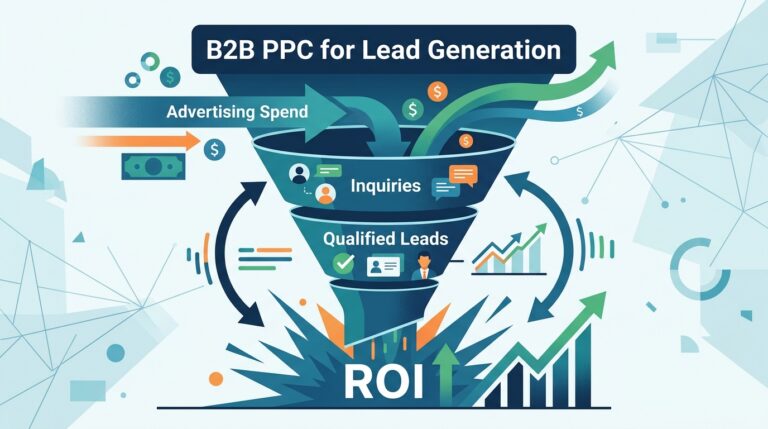
For search-specific tactics, budgets and a worked cost model, see our guide to B2B PPC for lead generation.
Judge it by: cost per qualified opportunity by campaign and role, not cost per click or cost per form fill.
10. Run Content Syndication With a Real Lead Specification
Content syndication means paying a publisher or lead-generation network to promote your gated asset to its audience and deliver the contact records of people who request it. It reaches in-market buyers outside your own audience at scale. It also has a reputation for weak leads, and the cause is usually the contract, not the content.
A syndicated lead is a signal that someone consumed your content. It is not a request to be sold to. Two vendors at the same price can deliver completely different audiences, and the difference is in the lead specification.
What your syndication contract should define:
- Firmographic filters: industry, size, geography and any named account list
- Role and seniority defined by function, not just job title
- Proof the contact actually consumed the asset, with an asset identifier and engagement timestamp
- How each lead is verified
- Consent wording and timestamp, documented and reproducible
- Delivery pacing, rejection windows and replacement terms
| Tier | What you get | Where it belongs |
|---|---|---|
| Standard | Contact who downloaded the asset | Nurture |
| Firmographic and role | Contact matching company and function filters | Nurture, with account-level ABM signals |
| Custom questions | Contact who answered your qualifying questions | Targeted nurture or SDR review |
| Intent | Contact at an account showing active research | SDR outreach |
| Sales-ready | Contact with documented need and next step | Sales queue |
How to run it:
- Test the first delivery for duplicates against your database, asset match, title fit, consent proof, pacing and reachability. Volume bunched at the end of a period often signals quota-filling from weaker inventory.
- Route by tier, not by source. Standard-tier leads belong in nurture, not a sales queue.
- Compare vendors on cost per accepted lead: net charges divided by leads accepted under the agreed specification.
Go deeper with our guides to improving content syndication lead quality and ROI and choosing a content syndication provider.
Judge it by: rejection, duplicate and connect rates by vendor, plus how delivery cohorts progress through the funnel over time. Last-touch attribution undervalues syndication, because it is usually an early touch.
Running syndication this quarter? Reach Marketing’s content syndication program provides audience estimates after every filter, qualification written into acceptance criteria, and the asset and timestamp on every record. Targeting runs through ReachBase.
11. Score Fit and Intent Separately, Then Route and Align With Sales
Many teams combine every behavior into one lead score. That inflates interest without proving quality: a student, competitor or very small company can rack up points by opening emails and attending webinars. Score fit and intent separately instead.
Add score decay, so old activity stops inflating a lead’s priority. Scoring only works if sales agrees with it, and alignment problems are predictable: marketing celebrates volume, sales complains about quality, and leads sit untouched.
| Alignment area | Poor practice | Strong practice |
|---|---|---|
| Lead definition | Any form fill becomes an MQL | Fit, intent and role determine qualification |
| Routing | Leads enter a general queue | High-intent leads go to assigned owners |
| Follow-up | Sales decides when to respond | Response SLAs defined by lead type |
| Feedback | Rejections are informal | Disposition reasons tracked consistently |
| Reporting | Campaigns measured by volume | Campaigns measured by pipeline contribution |
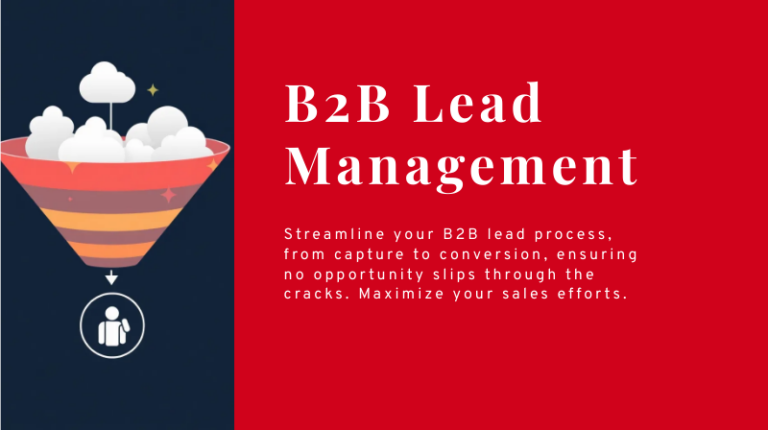
For the full operating model, see our guide to B2B lead management. If your scoring lives in HubSpot, Marketo, Pardot or Marketing Cloud, our marketing automation consultants can rebuild it around separate fit and intent scores.
Judge it by: MQL-to-SQL rate, sales acceptance rate, and time from MQL to first touch.
12. Nurture and Retarget Across Long Buying Cycles
Most B2B leads are not ready to talk to sales when they first convert. Buyers pause for budget timing, pull in new stakeholders and revisit requirements. Nurturing and retargeting keep you relevant in those gaps, and well-run nurture programs produce more pipeline from the same lead volume.
| Stage | Content that fits |
|---|---|
| Early | Educational guides, frameworks, benchmarks |
| Evaluation | Comparisons, technical guides, use cases |
| Decision | Case studies, ROI proof, implementation and security material |
Retargeting segments worth building:
- Pricing page visitors
- Demo page visitors who did not submit
- Comparison page visitors
- Target account visitors
- Webinar registrants and no-shows
- Abandoned form users
The goal is not constant exposure but progressive relevance. Someone who viewed pricing should not get the same ad as someone who read an introductory blog post. Rotate proof points, objection handling and decision-stage offers. Use campaign management to trigger the next message from behavior, set clear score thresholds for when sales steps in, and follow a documented B2B nurture framework.
Judge it by: nurture-to-MQL conversion, re-engagement rate, and pipeline influenced by nurture.
13. Offer Guided Trials and Confidence Assets
Buyers often stall because they cannot prove fit or reduce risk internally. Trials and confidence assets give champions what they need to move the deal forward, and they surface qualified interest earlier, even in enterprise deals.
Confidence assets to build:
- Readiness assessments and configuration tools
- Pricing frameworks that explain the decision logic
- Proof by role: case studies for finance, IT and operations
- Security and compliance packs for technical reviewers
- Business case templates the champion can take to leadership
| Approach | Best for | How it qualifies buyers |
|---|---|---|
| Freemium or free tier | Lower-priced, self-serve products | Usage shows value before purchase |
| Tiered pricing | Products serving several segments | Lets buyers start small and expand |
| Guided sandbox | Mid-market and enterprise | Realistic data templates and clear success criteria |
| Facilitated preview | Tier 1 accounts | A curated environment that mirrors their workflow |
Define usage-qualified lead (UQL) thresholds, such as projects created, integrations connected or active users, that trigger sales involvement. Bring customer success in early to answer rollout and adoption questions.
Judge it by: UQL-to-opportunity rate, and cycle time for trial deals vs. non-trial deals.
14. Run Webinars and Events That Solve Buying-Committee Problems
Webinars and events produce pipeline when the topic attracts decision-makers with an active problem, not a broad audience seeking general education. Attendance takes commitment, so event leads often carry more intent, and one session can reach several members of a buying committee at once.
| Pipeline-focused topic angles | Metrics beyond registration |
|---|---|
| A new operational challenge | Attendance quality and account fit |
| A costly mistake buyers want to avoid | Questions asked during the session |
| A comparison of approaches | Poll responses and engagement depth |
| A regulatory or compliance shift | Meetings booked per 100 registrants |
| A benchmark or performance gap | Opportunities created from follow-up |
| A practical decision framework | Pipeline velocity of event cohorts |
How to run it:
- Favor utility over spectacle: workshops, peer panels and small roundtables over product pitches.
- Invite named ABM accounts, and treat attendance as a trigger for stronger engagement.
- Follow up with context. “Thanks for attending” creates no urgency. Reference the attendee’s role, company type, question or poll answer, and connect it to a specific problem.
- Turn each session into clips, recaps, annotated slides and checklists to extend its reach.
To fill sessions beyond your own list, consider webinar syndication or the MARKETING AI+ Event Accelerator.
Judge it by: meetings per 100 registrants and event-sourced pipeline.
15. Build Authority With Executive Content and Video
B2B buyers do most of their research before contacting a vendor, so the companies they trust early tend to make the shortlist. Executive point-of-view content and video put real expertise in front of buyers before they enter a funnel.
How to run it:
- Pick two to four executive voices and publish regular, specific insight posts on LinkedIn: how you think about a problem, lessons from failures, contrarian takes.
- Build an artifact library. Package internal frameworks, scorecards and templates as public resources, like white papers and a lead generation glossary.
- Use video where it explains faster than text: short explainers, product walkthroughs, customer stories, webinar clips and personalized video in outreach.
- Repurpose with intent. One strong idea can become a blog post, a short video, a LinkedIn post and a checklist, each shaped for its format.
- Focus on one or two platforms where your buyers actually spend time, rather than spreading thin.
Judge it by: saves, shares and downloads; branded search growth; and inbound meetings traced to content.
16. Build Referral and Partner Programs
Referred leads enter the pipeline with trust already transferred. B2B buyers lean on peers, consultants, technology partners and industry groups to reduce risk, which is why referrals tend to convert at high rates with short cycles.
The mistake is treating referrals as luck. A structured program defines who can refer, what a valuable account looks like, how introductions happen, how partners are supported and how success is measured.
How to run it:
- Choose a few anchor partners whose customers overlap your ICP.
- Co-create a play: a joint webinar, shared asset, reference architecture or co-demo.
- Enable partner sales teams with a short kit: discovery questions, objection handling and example decks.
- Make it reciprocal. Route leads to partners in their domain, and be transparent about sourced vs. influenced deals.
- Still qualify partner leads. A warm introduction does not guarantee a strong-fit opportunity.
Judge it by: partner-sourced opportunities, win rate on partner deals, and partner-influenced revenue.
How AI Fits Into B2B Lead Generation
AI improves B2B lead generation when it adds speed and precision to a strategy that already works. A weak ICP, unclear offer or misaligned sales process will not improve because automation is added; it will just fail faster.
| Useful AI applications | Where AI creates risk |
|---|---|
| Finding patterns in closed-won data to refine the ICP | Generic outreach automated at scale |
| Predictive account and lead scoring | Shallow personalization buyers spot instantly |
| Summarizing account research for reps | Scaling volume without strategic control |
| Drafting role-specific outreach for human review | Replacing human judgment on high-value accounts |
| Enriching and cleaning CRM records | Treating every signal as equally meaningful |
| Alerting on account behavior changes, like several stakeholders visiting pricing | Unreviewed claims about pricing, security or legal terms |
| Qualifying inbound visitors with chatbots, then routing them | Models trained on dirty or incomplete data |
Keep three kinds of logic separate. Predictive AI estimates outcomes, such as who is likely to convert. Generative AI drafts and summarizes material. Deterministic rules enforce policy, such as consent, suppression and routing. They fail in different ways, so each needs its own testing and oversight.
Guardrails that keep AI accountable:
- Keep a human in the loop for high-risk content: pricing, security statements and legal claims.
- Log AI recommendations and human overrides.
- Test AI-driven changes against a randomized holdout group before fully automating them, and judge them by incremental pipeline, not model accuracy or open rates.
- Recheck scoring models regularly for false positives and drift.
For a deeper look, read our guide to AI for database marketing or explore MARKETING AI.
How to Choose the Right B2B Lead Generation Strategies
The best B2B lead generation strategy depends on your deal size, sales cycle and buying-committee complexity. The right question is not which tactic produces the most leads, but which produces the most qualified pipeline at an acceptable cost.
Strategy by Business Context
| Business context | Best-fit strategies |
|---|---|
| High average deal value | ABM, executive outreach, partner referrals |
| Shorter sales cycle | High-intent content, paid search, demo-led conversion |
| Complex buying committee | Role-specific content, webinars, retargeting |
| Narrow vertical market | Industry pages, targeted outbound, partner channels |
| Early-stage or new category | Educational content, thought leadership, demand creation |
| Mature, competitive category | Comparison content, proof assets, intent data |
| Self-serve or product-led motion | Free trials, freemium tiers, usage-based qualification |
How the Main Channels Compare
| Channel | Lead volume | Intent quality | Effect on sales cycle | Cost efficiency |
|---|---|---|---|---|
| Organic search | High | High | Moderate | High |
| Paid media | High | Variable | Short | Moderate |
| Outbound email | Moderate | Variable | Short | High |
| LinkedIn outreach | Moderate | High | Moderate | Moderate |
| Content syndication | High | Depends on tier | Moderate | Moderate to high |
| Webinars and events | Low | High | Long | High |
| Referrals | Low | Very high | Short | Very high |
| Product-led | High | Very high | Short | High |
Inbound, Outbound and Events: When to Use Each
- Inbound (content, SEO, community): best for compounding authority and attracting problem-aware buyers. Use it when you can publish consistently.
- Outbound (triggered outreach): best for timely nudges when account behavior spikes, or when entering a new vertical.
- Events (workshops, roundtables): best for building trust quickly and shortening time to meeting, especially with Tier 1 accounts.
Most programs need a mix. Relying only on inbound tends to produce uneven lead flow, while relying only on outbound is hard to scale efficiently.
Focus beats breadth. Each quarter, choose two creation motions, such as events and executive content, and two acceleration motions, such as email and triggered outbound. Run them well, review results monthly, and cut what does not advance pipeline.
How to Measure B2B Lead Generation
Measure B2B lead generation by the pipeline and revenue it produces, not by traffic, form fills or open rates. Volume metrics are useful diagnostics, but they should never be the headline.
| KPI | What it tells you | How to calculate it |
|---|---|---|
| Cost per qualified opportunity | True acquisition efficiency | Program spend ÷ qualified opportunities created |
| Stage conversion rates | Where the funnel leaks | Leads advancing ÷ leads entering each stage |
| Sales acceptance rate | Whether sales trusts marketing’s leads | SALs ÷ MQLs delivered |
| Pipeline velocity | How fast leads turn into revenue | Time from first touch to closed-won |
| Pipeline contribution by channel | Which channels to fund | Qualified pipeline value by source |
| CAC to LTV ratio | Whether growth is profitable | Customer acquisition cost vs. lifetime value |
| Engaged buying-group size | Depth of account engagement | Unique engaged stakeholders per target account |
| Inbox health | Whether email can keep working | Spam complaint and bounce rates |
Measurement practices that hold up:
- Track delivery cohorts through the funnel over time, rather than counting leads in the month they arrived.
- Use account-level influence for early-stage channels like syndication and events, which last-touch attribution systematically undervalues.
- Run holdout tests where you can. Comparing similar accounts with and without a program is the strongest evidence of incremental impact.
- Hold monthly reviews with sales, and pause channels that produce activity but no pipeline. Business intelligence reporting makes these reviews repeatable.
A 90-Day B2B Lead Generation Rollout Plan
You do not need all 16 strategies at once. Build the foundations first, then add channels in focused sprints.
| Phase | Focus | Key actions |
|---|---|---|
| Days 0–30 | Foundations | Finalize ICP and account tiers; clean and enrich your data; audit email authentication (SPF, DKIM, DMARC); connect first-party tracking to the CRM; agree MQL and SQL definitions and response SLAs with sales; publish two or three confidence assets |
| Days 31–60 | Launch | Start an ABM sprint for one segment; launch a triggered outbound sequence capped at three touches; set up separate fit and intent scoring; pilot one content syndication program with a written lead specification |
| Days 61–90 | Expand and test | Run a targeted webinar or roundtable for 40–60 named accounts; launch role-specific LinkedIn campaigns; activate one anchor partner; compare predictive scoring against a holdout group |
| Ongoing | Optimize | Review pipeline quality monthly; refresh content by buying stage each quarter; monitor deliverability weekly; scale what advances pipeline and cut what does not |
Common B2B Lead Generation Mistakes to Avoid
Most underperforming programs fail for a handful of predictable reasons, and each has a straightforward fix.
| Mistake | Do this instead |
|---|---|
| Chasing lead volume | Measure qualified opportunities and pipeline contribution |
| Gating every asset | Ungate discovery content; gate only high-value tools |
| “Request a demo” as the only CTA | Offer diagnostics, readiness checks and sandbox walkthroughs |
| Over-sequencing outbound | Cap at about three touches, then pause unless new behavior appears |
| Slow follow-up | Route high-intent leads to a named owner with response SLAs |
| Sending every lead to sales | Route by fit, intent and qualification tier |
| Relying on one channel | Run two creation and two acceleration motions |
| Feature-led messaging | Lead with the buyer’s business problem and outcomes |
| Poor or stale data | Clean, verify and refresh records at least every three to six months |
| No shared lead definitions | Write MQL and SQL criteria down and agree them with sales |
| Reporting clicks as success | Treat opens and clicks as diagnostics, not results |
FAQ
What are the most effective B2B lead generation strategies?
The most effective strategies depend on your deal size and sales motion. Account-based marketing, high-intent content, intent data, partner referrals and targeted outbound consistently perform well when they are built on a precise ideal customer profile and clean data. Measure them by qualified pipeline, not lead volume.
What is the difference between demand generation and lead generation?
Demand generation builds awareness and preference before buyers are ready to engage. Lead generation converts that attention into identifiable opportunities through forms, registrations, trials and outreach. Strong programs invest in both and connect the data between them, so leads are captured when intent appears.
What makes a B2B lead qualified?
A qualified B2B lead fits your ideal customer profile, has a relevant business problem, involves a stakeholder connected to the buying decision, and has a realistic next step. Timing signals, such as repeated visits to pricing pages, help separate active evaluators from casual researchers.
What is a good B2B lead conversion rate?
It depends on the stage. Recent benchmark research reports median rates of about 1.8% from visitor to MQL, 13.7% from MQL to SQL, 38.4% from SQL to opportunity and 23.8% from opportunity to closed-won. Top-quartile teams roughly double the MQL-to-SQL median.[1]
How much does a B2B lead cost?
Most B2B industries pay roughly $200 to $700 per lead, with legal, financial services and enterprise targeting at the higher end.[4] Cost per lead alone is misleading: judge it against close rate, sales cycle and customer lifetime value, and track cost per qualified opportunity instead.
Which channel produces the highest-quality B2B leads?
Referrals and product-led channels usually produce the highest-quality leads, because trust or demonstrated value comes built in. Organic search and well-targeted LinkedIn campaigns deliver strong intent at greater scale. Most programs perform best with a mix of channels.
Should you gate B2B content?
Gate selectively. Leave discovery content such as frameworks, checklists and explainers ungated so it can rank and spread. Gate deeper assets like calculators, benchmarks and toolkits where the value exchange is obvious, and keep those forms short.
Does cold email still work for B2B lead generation?
Yes, when it is run like a regulated channel. That means an authenticated sending domain, clean and targeted lists, short messages tied to a specific trigger, a useful artifact, and sequences capped at about three touches. Generic, high-volume blasts damage deliverability and rarely produce pipeline.
How should you measure B2B lead generation?
Measure accepted opportunities, qualified pipeline, stage conversion rates, pipeline velocity, cost per qualified opportunity and revenue contribution by channel. Track delivery cohorts over time, and use holdout tests where possible to prove incremental impact.
How does AI improve B2B lead generation?
AI improves lead generation when it is used for research, predictive scoring, data enrichment, personalization and routing, with humans reviewing high-stakes content. It becomes risky when it scales generic outreach or replaces judgment on high-value accounts. Test AI changes against holdout groups.
Build a Lead Generation Program Around Qualified Pipeline
The strongest B2B lead generation strategies are not the newest tactics. They are the fundamentals, run with discipline: a precise ICP, clean data, offers matched to buyer stage, separate fit and intent scoring, fast routing, and a shared definition of quality between marketing and sales. Get those right, and every channel you add performs better.
Reach Marketing has generated more than 1.1 million top-, middle- and bottom-of-funnel leads for B2B companies, using permission-based data, data hygiene and multi-channel B2B lead generation programs built around buyer fit and real intent. See the results in our case studies and client testimonials.
Ready to build pipeline, not just lead volume? Schedule a call, contact us or call 877-345-2438.
Sources
- Visionary Marketing, “B2B Funnel Benchmark 2026,” accessed October 2026. visionary-marketing.co.uk
- Marketful, “Marketing Funnel: Real Benchmarks, Stages, and B2B Frameworks,” accessed October 2026. marketful.com
- Oldroyd, McElheran and Elkington, “The Short Life of Online Sales Leads,” Harvard Business Review, 2011, as summarized by Retell AI, accessed October 2026. retellai.com
- Emulent, “Average Cost Per Lead Benchmarks by Industry,” April 2026, accessed October 2026. emulent.com
- Emulent, “Cost Per Lead by Company Size,” accessed October 2026. emulent.com
- The Starr Conspiracy, “B2B Buyer Journey Statistics in Practice,” summarizing Gartner research, accessed October 2026. thestarrconspiracy.com
- Komo, “Buyer Journey,” summarizing the 6sense 2025 Buyer Experience Report, accessed October 2026. komo.ai