

How to use email list hygiene to improve engagement, sales, and deliverability
Email marketing is still one of the highest-ROI tools a business can use – but only if your email list is clean, active, and filled with people who actually want to hear from you. Over time, though, even the best email lists get cluttered. Contacts go inactive, subscribers change jobs, spam traps find their way in, and engagement drops in ways that can hurt your sender reputation.
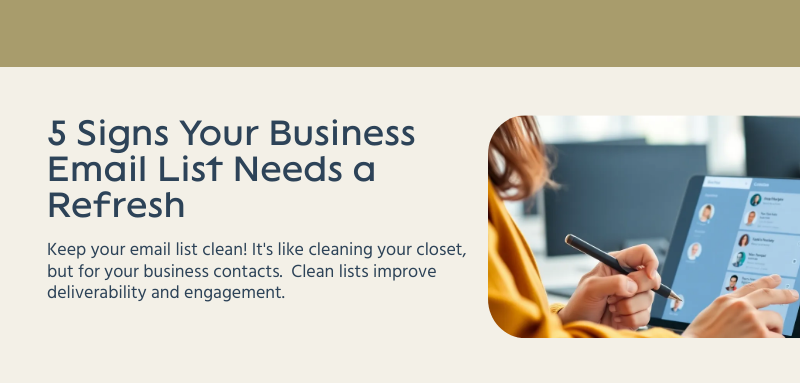
That’s where email list hygiene comes in. Think of it like regular maintenance: the same way you clean out your closet or update your phone contacts, you need to do the same with your email list if you want strong deliverability and consistent results.
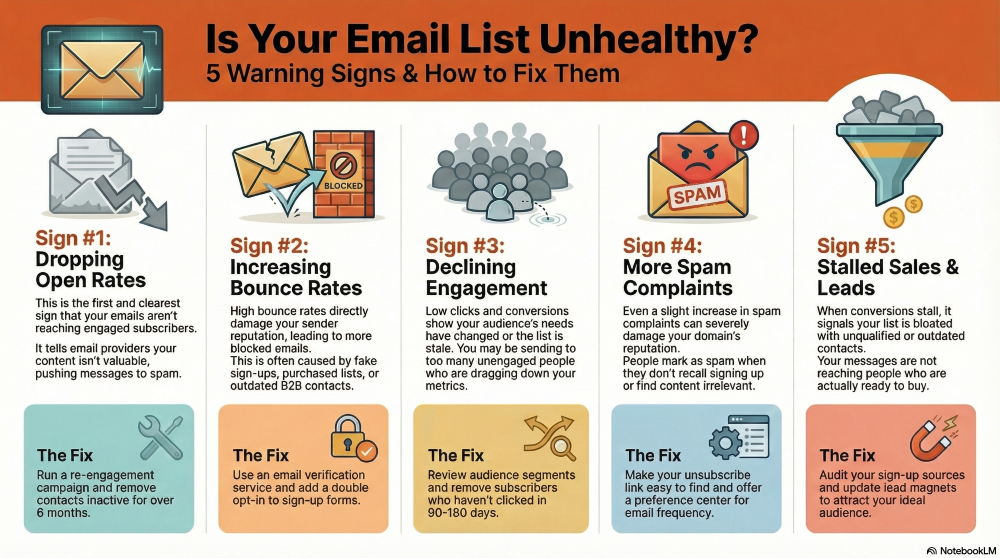
Below are five major signs your business email list needs a refresh — plus why each one matters and how addressing them can boost everything from open rates to revenue..
1. Your Open Rates Have Dropped (And They’re Staying Low)
A decline in open rates is usually the first and clearest sign that your email list hygiene is slipping. While a temporary dip can be normal — especially after big promotions or seasonal campaigns — a steady downward trend means your emails aren’t landing where they should or people simply aren’t responding the way they used to.
Why This Happens:
- Inactive subscribers who haven’t opened in months (or years)
- Outdated email addresses, especially from old lead-generation campaigns
- More spam filtering, triggered by low engagement
- People switching jobs, which is huge if you’re in B2B lead generation
All of these lead to fewer opens, which tells email providers your content isn’t valuable. When that happens, inboxes start pushing your messages into promotions folders or — worse — spam.
What You Can Do:
- Segment out inactive subscribers and run a re-engagement sequence.
- Remove anyone who hasn’t engaged in 6+ months
- Review your content strategy to ensure emails are relevant, valuable, and timely.
- Use email list hygiene tools to identify invalid or dead contacts.
Even a 5–10% improvement in open rates can drastically improve your deliverability and revenue from email.
2. Your Bounce Rates Are Increasing
A spike in bounce rates — especially hard bounces — is a strong indicator that something’s wrong with your list quality.
Why This Happens:
- People enter fake email addresses on sign-up forms.
- B2B contacts leave their jobs (company emails get shut off immediately).
- You purchased or inherited a low-quality list.
- Your list hasn’t been cleaned in a long time.
Why Bounce Rates Matter:
High bounce rates don’t just mean fewer people see your emails — they damage your sender reputation. The worse your reputation is, the more likely email providers will block or filter your messages. Once this happens, even high-quality subscribers may stop seeing your campaigns.
What You Can Do:
- Use an email verification service to remove invalid addresses.
- Add double opt-in to prevent fake sign-ups.
- Run quarterly email list hygiene checks.
- Remove any address that has bounced more than once.
A clean list means better inbox placement — which means better performance across the board.
3. Engagement Metrics Are Flat (Or Declining)
You can tell a lot about your email list from what people do after they open your messages. Click rates, reply rates, scroll depth, and conversions all indicate whether your audience actually cares about what you’re sending.
When all of these start flattening out, it’s a major red flag.
Possible Reasons:
- Your audience’s needs have changed.
- Too many unengaged people are inflating your list.
- You’re emailing too often — or not often enough.
- Your list segments are outdated.
- You haven’t pruned inactive subscribers in a long time.
What You Can Do:
- Review your segmentation to make sure people are getting the right content.
- Remove subscribers who haven’t clicked in 90–180 days.
- Experiment with new content formats, subject lines, or offers.
- Use tagging to personalize content based on behavior.
Good email list hygiene ensures you’re only sending campaigns to people who are actually paying attention — which boosts your overall engagement metrics.
4. You’re Getting More Spam Complaints Than Before
Spam complaints are a big deal. Even a slight increase can hurt your deliverability, damage your domain’s reputation, and push future emails into spam folders.
Why People Mark Emails as Spam:
- They don’t remember signing up.
- They signed up for one thing but received something different.
- You email too frequently.
- You email too infrequently, and they forgot who you are.
- Your content no longer feels relevant.
- The unsubscribe link is buried or too hard to find.
How Email List Hygiene Helps:
- Removes people who aren’t interested anymore.
- Ensures opt-in processes are clear and transparent.
- Keeps your content aligned with subscriber expectations.
What You Can Do:
- Make your unsubscribe link visible (this actually improves deliverability).
- Segment by engagement to avoid overwhelming inactive users.
- Use preference centers to let subscribers choose email frequency.
A clean, well-maintained list keeps complaints low and trust high.
5. Your Sales or Lead-Gen Results Have Stalled
Sometimes everything looks fine on the surface — your opens are solid, bounces are low, and complaints are minimal — but your sales, lead quality, or conversion rates tell a different story.
This is usually a deeper sign that your list is outdated or poorly segmented.
Possible Reasons:
- The wrong people are receiving the wrong content.
- Old subscribers no longer reflect your target audience.
- You’re relying on outdated lead magnets that attract low-quality leads.
- Your list is bloated with passive or unqualified contacts.
What You Can Do:
- Review sign-up sources and cut any that consistently produce low-quality contacts.
- Update your lead magnets to attract your ideal audience.
- Rebuild or refine your email segments.
- Clean your list manually or with an email list hygiene tool.
Your email list should be an asset, not a burden. A refresh ensures your campaigns reach people who are ready to buy, engage, or learn more.
Why Email List Hygiene Matters More Than Ever
In 2025 and beyond, inboxes are more competitive, spam filters are smarter, and attention spans are shorter. Your email list has to be clean, active, and relevant if you want predictable results.
Good email list hygiene doesn’t just reduce risk — it unlocks better:
- Deliverability
- Open rates
- Click-through rates
- Sales & conversions
- Customer loyalty
- Brand reputation
It’s one of the easiest ways to improve your email marketing without rewriting your strategy or increasing your budget.
How Email List Hygiene Protects You From Spam Traps
Most businesses don’t realize they’re at risk of hitting spam traps until it’s too late. Spam traps are email addresses used by inbox providers to catch senders with poor list hygiene, and even one hit can hurt your deliverability.
How Spam Traps End Up on Your List:
- Old, abandoned emails recycled by providers
- Typos or misspelled domains (e.g., gmall vs. gmail)
- Contacts harvested from old lists or purchased lists
- Long-term inactive subscribers you never removed
Why Spam Traps Matter:
When you hit a spam trap, it signals to inbox providers that you’re not maintaining your list properly — which can lead to throttling, filtering, and even temporary blocks.
How to Avoid Them:
- Regularly remove subscribers inactive for 6+ months
- Use verification tools to catch syntax errors and fake domains
- Avoid buying lists completely
- Monitor engagement to spot suspicious patterns
A clean, well-maintained list makes spam traps nearly impossible to hit — protecting your reputation and your revenue.
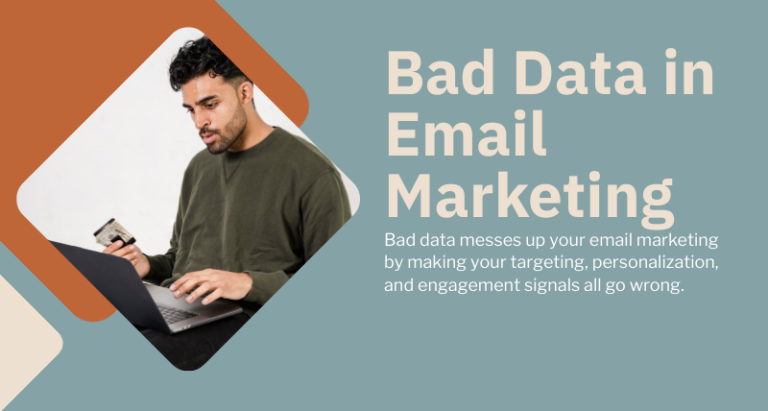
The Hidden Cost of Keeping Bad Data
Many businesses think having a bigger list automatically means bigger results, but in reality, keeping bad data can cost you money, time, and performance.
The Real Costs of Bad Data:
- Lower deliverability → fewer emails land in inboxes
- Higher sending costs → you pay for inactive or fake contacts
- Sloppy analytics → engagement metrics become unreliable
- Lost sales → offers never reach your best prospects
- Damage to brand credibility → inconsistent, low-quality data leads to inconsistent messaging.
Why This Happens:
Bad data builds up quietly: outdated job emails, spam bots, users who never engage, people who opted in years ago, and contacts collected from unreliable sources.
How Email List Hygiene Solves It:
- Removes dead weight so your analytics reflect real performance
- Lowers your monthly cost with email service providers
- Improves personalization by ensuring you’re working with accurate data
- Strengthens your relationships with engaged subscribers
When you treat your email list as a high-value digital asset, not a storage container, your ROI goes up dramatically.
How to Build a Long-Term Email List Hygiene Strategy
Most businesses think of list cleaning as a one-time “spring cleaning,” but the best results come from turning it into a predictable, ongoing system.
Components of a Strong Hygiene Strategy:
1. Clear Opt-In Standards
Use transparent forms, clean design, and double opt-in when possible. The better the source, the cleaner the list.
2. Automatic Sunset Policies
Set rules for when inactive subscribers get removed (e.g., no opens or clicks for 180 days).
3. Engagement-Based Segmentation
Group your list into highly active, moderately active, and inactive segments — and treat each differently.
4. Quarterly List Audits
Check for bounces, spam traps, unengaged contacts, and low-quality acquisition sources.
5. Behavior-Based Workflows
Tag subscribers based on what they click, what they buy, and how often they engage. This keeps your data accurate and your messaging relevant.
6. Ongoing Verification
Run new subscribers through a verification service before they’re added to your main list.
A long-term hygiene strategy keeps your list clean, your engagement strong, and your deliverability protected — without draining your time or resources.
A Clean Email List Is the Foundation of Sustainable Growth
At the end of the day, email marketing only works when your list is healthy. A bloated, outdated, or unengaged list doesn’t just drag down your metrics — it drags down your revenue, your sender reputation, and the long-term success of your marketing as a whole. Email list hygiene isn’t busywork; it’s a growth strategy. It’s how you make sure the right people are seeing the right message at the right time.
When you consistently remove bad data, verify new subscribers, refresh your segments, and monitor engagement, your list becomes a powerful asset instead of a liability. And as inboxes get more competitive and algorithms get stricter, the businesses with the cleanest lists will always have the strongest advantage.
If you treat your email list like a living, evolving part of your business — one that needs consistent care, pruning, and intentional strategy — you’ll see better deliverability, higher engagement, and stronger sales over time. Clean data drives real results, and keeping your list healthy is one of the smartest moves you can make for your marketing future.
FAQs – Does Your Business Email List Need a Refresh?
1. How often should I clean my email list?
Most businesses should do a full cleanup every 3–6 months. High-volume senders should refresh their lists monthly.
2. Does deleting subscribers hurt my business?
No — removing unengaged subscribers helps your deliverability and increases your average engagement rate.
3. What causes invalid email addresses to end up on my list?
Fake sign-ups, typos, spam bots, purchased lists, job changes, and outdated lead sources.
4. Can poor email list hygiene put my domain at risk?
Yes. High bounce rates and complaints can cause providers to block or throttle your domain.
5. Should I use single or double opt-in?
Double opt-in is best for email list hygiene, but single opt-in is fine if you verify emails before adding them to your list.
6. Why do my emails go to spam even when people opted in?
Low engagement, outdated contacts, poor sender reputation, spam-triggering content, or unclean lists.
7. How can I re-engage inactive subscribers?
Send a re-engagement sequence with offers, preferences, or a “Still want to hear from us?” message.
8. Should I segment my list before cleaning it?
Yes — segmentation helps you identify inactive groups and protect your most engaged subscribers.
9. What is the biggest mistake businesses make with email lists?
Keeping subscribers who haven’t opened or clicked in years.
10. Does buying email lists ever make sense?
No — purchased lists are terrible for email list hygiene, illegal in some cases, and guaranteed to hurt deliverability.