
The debate of inbound vs. outbound B2B lead generation is not new, but in 2025, the line between them is becoming more blurred. Smart businesses understand that it’s not about choosing one or the other, it’s about knowing when and how to leverage both.
Let’s break down the differences, explore the strengths and weaknesses of inbound and outbound strategies, provide real-world data, and help you decide which approach is right for your business.
What is B2B Lead Generation?
At its core, B2B lead generation is the process of identifying, attracting, and nurturing potential business customers who are a strong fit for your product or service. Unlike B2C lead generation, where decisions are often made quickly and based on emotional triggers, B2B sales leads typically involve a more strategic and data-driven buying process. Businesses don’t make impulse purchases; they evaluate solutions carefully, weigh ROI, and seek evidence that a vendor can meet their unique needs.
Key Characteristics of B2B Lead Generation
- Longer Decision-Making Processes
A single purchase in the B2B world can take weeks or even months. Gartner reports that the average B2B buying cycle is now six to twelve months, depending on deal size and complexity. This means lead generation strategies must focus on building trust and providing ongoing value rather than chasing quick wins. - Multiple Stakeholders
In most B2B deals, you’re not selling to one person, you’re selling to a buying committee. This committee often includes decision-makers (executives), influencers (department heads), and end-users (the teams who will actually use the product). Effective B2B demand generation strategies must address the unique concerns of each stakeholder group. - Higher-Value Contracts
B2B contracts are usually worth far more than individual consumer purchases. Whether it’s a $50,000 annual SaaS subscription or a multi-million-dollar consulting engagement, the stakes are higher. This makes qualified B2B leads extremely valuable, since converting just one can have a significant impact on revenue. - More Complex Buyer Journeys
A typical B2B buyer doesn’t just visit your website once and make a purchase. They might:- Research keywords like “best B2B lead generation companies” or “top CRM for enterprises.”
- Read comparison articles, whitepapers, and case studies.
- Attend webinars or download industry reports.
- Engage with your brand on LinkedIn.
- Request a demo or consultation only after multiple touchpoints.
This complexity means that B2B lead generation strategies must blend marketing automation, personalized outreach, and relationship-building.
The Ultimate Goal of B2B Lead Generation
Regardless of whether you use inbound marketing strategies (like content marketing, SEO, and webinars) or outbound prospecting (like cold emailing, LinkedIn outreach, and targeted ads), the ultimate goal remains the same:
Fill your sales pipeline with high-quality, qualified leads that can convert into long-term clients.
Done right, B2B lead generation not only drives revenue but also creates stronger customer relationships, builds brand authority, and positions your company as a trusted partner in the marketplace.
Inbound Lead Generation Explained
Inbound lead generation is about attracting prospects naturally by providing valuable, relevant content and solutions that align with their problems. Instead of pushing your product directly, inbound helps you be discovered by your ideal clients when they are actively searching for solutions.
Core Tactics of Inbound B2B Lead Generation
- Content Marketing – Blogs, case studies, whitepapers, and industry reports help educate prospects and establish authority.
- SEO & Organic Search – Optimizing for search engines ensures your content ranks when decision-makers are searching for terms like “best B2B lead generation strategies” or “how to improve outbound sales.”
- Email Marketing – Automated nurture campaigns keep leads engaged over time.
- Webinars & Virtual Events – Offering insights and thought leadership builds trust.
- Social Media Marketing – Sharing insights on LinkedIn or Twitter positions your brand as an industry leader.
Why Inbound Works
Inbound focuses on earning attention instead of interrupting it. When a CFO downloads your whitepaper or a sales manager subscribes to your newsletter, they’re signaling real interest. Studies from HubSpot show that inbound leads cost 61% less on average than outbound leads.
Inbound is also ideal for businesses with longer sales cycles, because it nurtures relationships and builds credibility over time.
Outbound Lead Generation Explained
Outbound lead generation is the more traditional, proactive approach. Instead of waiting for leads to find you, your sales team reaches out directly to potential buyers.
Core Tactics of Outbound B2B Lead Generation
- Cold Calling & Cold Emailing – Direct outreach to decision-makers at target accounts.
- LinkedIn Prospecting – Using Sales Navigator to identify and message qualified leads.
- Paid Advertising – Running LinkedIn ads, Google Ads, or industry display ads targeting decision-makers.
- Direct Mail & Events – Sending personalized packages or networking at trade shows.
- Appointment Setting Services – Using outsourced SDR teams to fill calendars with qualified meetings.
Why Outbound Works
Outbound is about speed and precision. You can target specific industries, job titles, and company sizes without waiting for organic traffic to build. According to RAIN Group research, 82% of buyers say they accept meetings with sellers who proactively reach out.
Outbound is especially useful for companies targeting enterprise accounts or needing quick wins to hit quarterly quotas.
Inbound vs. Outbound B2B Lead Generation: Key Differences
| Aspect | Inbound B2B Lead Generation | Outbound B2B Lead Generation |
| Approach | Attract leads through content & SEO | Proactively reach out to leads |
| Cost per Lead | Lower over time, compounding ROI | Higher upfront, especially with ads or SDR teams |
| Speed | Slower to scale but sustainable | Immediate pipeline opportunities |
| Control | Less control over who engages | Highly targeted outreach |
| Buyer Intent | Leads show self-motivated interest | Buyers may not be actively searching |
| Best For | Long-term growth & authority | Quick results & targeted account penetration |
When to Use Inbound Lead Generation
Inbound B2B lead generation is best suited for businesses that play the long game. Unlike transactional B2C sales, B2B sales leads often involve a drawn-out process, where buyers spend weeks or months gathering information, comparing solutions, and evaluating providers. This makes inbound a natural fit for companies that want to build authority, reduce cost per lead, and nurture trust over time.
Scenarios Where Inbound Excels
- Complex Products or Services with Long Sales Cycles
If your business offers sophisticated solutions, such as enterprise SaaS platforms, cloud infrastructure, or consulting services, buyers are unlikely to make snap decisions. They need to research, compare features, and see proof of ROI before making a commitment. Inbound strategies like SEO-driven blogs, whitepapers, and webinars allow you to be part of that research journey. - Companies Looking to Build Brand Authority
In industries where credibility and expertise matter, inbound lead generation positions your business as a trusted advisor. A steady flow of thought leadership content (case studies, industry reports, podcasts) builds recognition, ensuring that when buyers are ready, your company is top of mind. - Buyers Who Research Extensively
Certain industries, such as SaaS, professional services, or B2B tech, have highly educated buyers. They will likely Google terms like “best CRM for enterprise,” read reviews, watch demos, and consume content before ever talking to sales. Inbound ensures you show up at these critical decision-making moments. - Organizations Aiming to Reduce CPL Over Time
Outbound can provide quick wins, but the cost per lead is often higher due to ad spend, SDR salaries, and tools. Inbound, on the other hand, builds a self-sustaining funnel: once content ranks or once you have a strong email nurture campaign in place, the leads continue to flow at a fraction of the cost.
Example in Action
Take a B2B SaaS platform offering enterprise-level CRM solutions. Their ideal customers are mid-market or enterprise businesses with complex sales teams. These decision-makers won’t respond well to a cold email saying “Buy our CRM.” Instead, they’ll:
- Read comparison blogs about CRM platforms.
- Download ROI case studies showing cost savings.
- Attend webinars on sales pipeline optimization.
By providing valuable inbound content, the SaaS company becomes part of the buyer’s journey, leading to warmer, higher-quality leads that are easier to convert.
When to Use Outbound Lead Generation
While inbound is powerful, there are situations where outbound B2B lead generation is the smarter play. Outbound works best when you need immediate results, direct control, and targeted outreaches, especially in industries where inbound channels are less effective.
Scenarios Where Outbound Excels
- Startups or Companies Needing Fast Pipeline Growth
Inbound takes time. If you’re a startup trying to secure funding, or you need to hit quarterly sales quotas, waiting six months for SEO to rank won’t cut it. Outbound methods like cold emailing, LinkedIn outreach, and appointment setting can quickly get your solution in front of decision-makers. - Businesses Targeting High-Value Accounts
For companies practicing Account-Based Marketing (ABM), outbound is essential. If you already know your top 50 target accounts, it’s far more efficient to proactively reach out with tailored messaging than to hope they stumble across your content. Outbound lets you choose who enters your pipeline. - Industries Where Inbound Content Has Limited Reach
Some industries simply don’t consume much content online. For example, industrial suppliers, niche B2B manufacturers, or government contractors may not be searching for blogs or webinars. Outbound outreach ensures you can still generate qualified B2B sales leads even without heavy inbound engagement. - Companies with Well-Defined ICPs
If you’ve built strong Ideal Customer Profiles (ICPs) and know exactly who your buyers are (job titles, industries, company size), outbound gives you the tools to laser-focus outreach. Platforms like LinkedIn Sales Navigator and ZoomInfo make it easier than ever to find, verify, and contact the right people directly.
Example in Action
Consider a cybersecurity consulting firm targeting Fortune 500 CISOs (Chief Information Security Officers). These executives are extremely busy and unlikely to read blog posts or attend random webinars. Instead, the firm might:
- Run highly personalized outbound email campaigns with subject lines addressing specific cybersecurity concerns.
- Use LinkedIn InMail to connect directly with CISOs.
- Offer exclusive invites to a private executive roundtable event.
By cutting through the noise with targeted outbound prospecting, the firm can start conversations with the exact buyers they want, rather than waiting for inbound traffic.
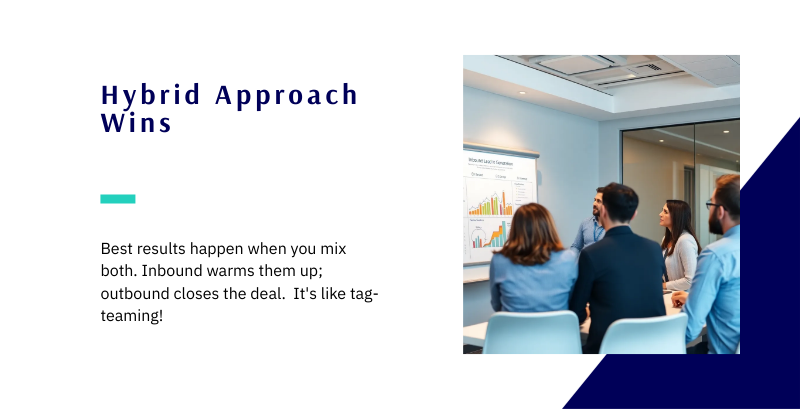
Combining Inbound and Outbound for Maximum ROI
The truth is, most successful B2B companies don’t choose inbound vs. outbound, they combine both in a hybrid model.
- Inbound generates warm leads through valuable content, which can be nurtured with outbound follow-ups.
- Outbound identifies target accounts, which can then be nurtured with inbound assets like webinars, case studies, or blog posts.
This approach, often called omnichannel B2B lead generation, ensures you capture both active buyers (inbound) and latent opportunities (outbound).
Data backs this up: LinkedIn research found that companies using a multi-channel mix of inbound and outbound strategies generated 28% higher conversion rates.
Challenges with Inbound Lead Generation
While inbound B2B lead generation is powerful for building long-term growth, it comes with its own hurdles that businesses must be prepared to face.
- Time-Intensive – Inbound lead generation is not a quick fix. SEO, blogging, and content marketing can take 6–12 months (sometimes longer) before delivering a steady stream of qualified B2B sales leads. Companies that need fast pipeline growth may find inbound frustrating if they expect immediate results.
- High Competition – Keywords like “B2B lead generation,” “best CRM software,” or “enterprise SaaS solutions” are highly competitive. Larger companies with established authority often dominate the first page of Google, making it harder for smaller businesses to break through without a strong content strategy and SEO investment.
- Requires Consistency – Inbound only works if it’s maintained consistently. Publishing one blog post a month or occasionally updating LinkedIn is not enough. Successful inbound strategies require regular content creation, social media engagement, and continuous optimization. Without commitment, results will plateau quickly.
- Hard to Control Buyer Behavior – One of the biggest challenges is that inbound relies on buyers taking the first step. You can’t force someone to download your whitepaper or attend your webinar. Even with excellent content, prospects may choose competitors, delay decisions, or disengage without explanation.
Inbound is sustainable and cost-effective in the long term, but it requires patience, investment, and a consistent strategy to overcome these challenges.
Challenges with Outbound Lead Generation
On the other hand, outbound B2B lead generation can deliver fast results, but it comes with significant challenges that businesses must manage carefully.
- Expensive – Outbound is resource-heavy. Salaries for SDRs (sales development representatives), ad spend on platforms like LinkedIn or Google, data subscriptions (ZoomInfo, Apollo, Clearbit), and automation tools all add up quickly. This makes customer acquisition costs (CAC) higher compared to inbound.
- Lower Trust – Cold emails, unsolicited LinkedIn messages, and unexpected calls can often feel intrusive. Buyers may ignore or block outreach attempts, making it harder to build trust. In fact, HubSpot reports that only 24% of sales emails are ever opened, showing the difficulty in breaking through the noise.
- Regulatory Concerns – Privacy regulations like GDPR, CAN-SPAM, and CCPA have made outbound prospecting more complex. Businesses must ensure compliance when sending cold emails or running targeted campaigns, or risk legal consequences and damage to their reputation.
- Scalability Issues – Outbound is highly labor-intensive. Once you stop making calls, sending emails, or funding ads, the leads stop flowing. Unlike inbound, which compounds over time, outbound requires constant effort and investment to maintain momentum.
Outbound B2B lead generation is fast and targeted, but it comes at a higher cost and faces trust, compliance, and scalability challenges.
Best Practices for B2B Lead Generation in 2025
- Align Sales & Marketing Teams – A unified approach ensures leads are nurtured consistently.
- Leverage Data & AI – Use tools like Apollo, ZoomInfo, or Clearbit to refine targeting.
- Prioritize Personalization – Both inbound and outbound efforts must feel human.
- Track Metrics Religiously – Monitor CPL, CAC, pipeline velocity, and conversion rates.
- Test & Optimize Continuously – What worked in 2023 may not work in 2025.
When it comes to inbound vs. outbound B2B lead generation, the right choice isn’t always clear-cut. Inbound lead generation builds sustainable, long-term pipelines with lower costs, while outbound lead generation delivers immediate results with high control over targeting.
For most B2B businesses in 2025, the winning formula is a balanced, hybrid approach. Inbound builds authority, brand equity, and trust, while outbound provides the speed and direct access needed to accelerate growth.
FAQ: Inbound vs. Outbound B2B Lead Generation
Q1: What is the main difference between inbound and outbound B2B lead generation?
Inbound attracts leads through content, SEO, and organic engagement, while outbound proactively reaches out through cold calls, emails, and ads.
Q2: Which strategy generates better quality B2B sales leads?
Inbound typically generates higher-quality leads since they show intent, but outbound can reach high-value accounts that might not be actively searching.
Q3: Is inbound lead generation cheaper than outbound?
Yes, inbound has a lower cost per lead over time, though outbound can deliver faster results with higher upfront investment.
Q4: Can inbound and outbound strategies be combined?
Absolutely. A hybrid approach often yields the best ROI. For example, outbound can target accounts, while inbound nurtures them with content.
Q5: How long does it take to see results with inbound lead generation?
It usually takes 6–12 months to see strong results from inbound SEO and content marketing, while outbound can generate meetings in weeks.
Q6: Which industries benefit most from inbound lead generation?
Industries with long buying cycles, like SaaS, B2B tech, consulting, and manufacturing, benefit most from inbound strategies.
Q7: What tools are best for outbound lead generation?
Tools like LinkedIn Sales Navigator, ZoomInfo, Apollo, Outreach.io, and HubSpot CRM are widely used.
Q8: How do you measure success in inbound vs. outbound B2B lead generation?
Inbound is measured by web traffic, MQLs, and cost per lead. Outbound is measured by response rates, booked meetings, and sales pipeline growth.
Q9: What’s the biggest challenge with outbound lead generation?
Standing out from the noise—buyers get dozens of cold emails daily. Personalization is critical.
Q10: How do I decide which strategy is right for my business?
If you need long-term, compounding growth, focus on inbound. If you need short-term results and have a clear target market, outbound may be better. Most companies should blend both.